
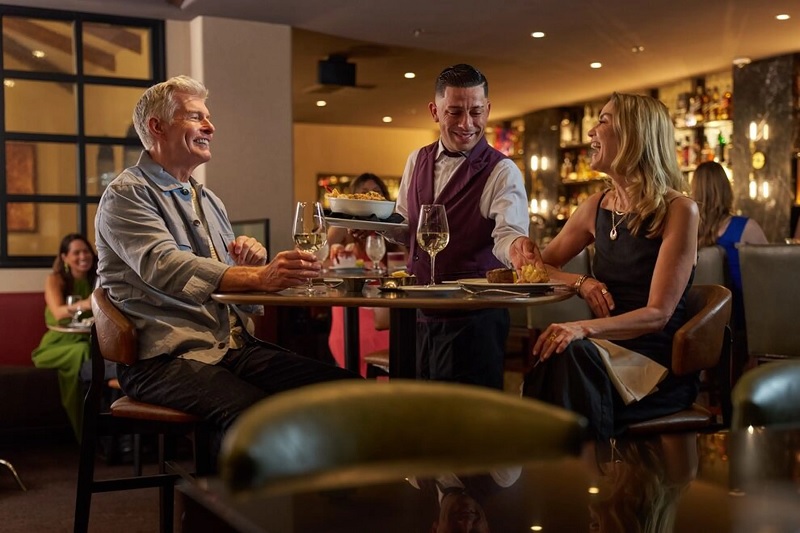

Decades ago, the culinary offerings at a casino were treated as a necessary afterthought. Management viewed restaurants as mere fueling stations designed to keep guests fed and get them back to the baccarat and blackjack tables as quickly as possible. The standard fare consisted of loss-leader buffets, inexpensive prime rib dinners, and aggressively lit cafeterias. Today, that model is entirely obsolete. The modern casino operates on a vastly different philosophy, positioning itself as a holistic luxury destination where the gaming floor is simply one facet of a much larger hospitality ecosystem. At the pinnacle of this transformation is the seamless, highly orchestrated integration of world-class fine dining and premium entertainment.
Modern resorts recognize that the most lucrative demographic is no longer just the dedicated gambler, but the experiential traveler. These guests demand a curated, multi-sensory evening where what is on the plate rivals what is on the stage.
The Evolution of the Integrated Resort
The shift toward the integrated resort model was driven by a fundamental change in consumer psychology. Travelers began to expect more from a weekend getaway than just a hotel room and a slot machine. They wanted destination dining, Broadway-caliber shows, high-end retail, and exclusive nightlife, all housed under one massive, climate-controlled roof.
To meet this demand, property developers essentially had to build indoor cities. This required a massive reallocation of square footage. The dark, labyrinthine casino floors of the past were pushed back to make room for grand promenades flanked by flagship restaurants and state-of-the-art performance venues. By diversifying their offerings, these properties successfully flipped their revenue models. In the world’s premier gaming markets, non-gaming revenue—driven heavily by food, beverage, and entertainment—now routinely outpaces gambling revenue.
Celebrity Chefs and the Culinary Spectacle
To anchor this new era of luxury hospitality, resorts began aggressively courting international culinary talent. The presence of a Michelin-starred chef or a globally recognized restaurateur immediately legitimizes a property, transforming it into a destination for food enthusiasts who may never even place a bet.
These high-end dining venues are not just about serving exceptional food; they are about delivering a localized theatrical experience. When you step into a premier steakhouse or a refined omakase room inside a major resort, the dining room itself acts as a stage. The interior design is meticulously crafted to transport the guest, utilizing dramatic lighting, bespoke acoustics, and custom architecture.
The Theatrical Kitchen
This performative aspect of dining is most evident in the rise of the open kitchen. The barrier between the back-of-house and the dining room has been intentionally dissolved. Guests can watch the chaotic, precise choreography of a world-class culinary brigade operating at peak service. Flames leaping from massive grills, the meticulous plating of delicate seafood, and the synchronized movements of the staff turn the preparation of the meal into a captivating pre-show event. Furthermore, tableside preparations—such as carving a dry-aged tomahawk ribeye, mixing a Caesar salad from scratch, or flambéing a dessert—bring the entertainment directly to the guest.
The Supper Club Renaissance
While having a great restaurant down the hall from a massive theater is the standard arrangement, the most innovative resorts are aggressively blurring the lines between the two spaces. This has led to the modern renaissance of the supper club.
Historically, supper clubs offered dinner and a show in a single, intimate setting. Today’s casino resorts have resurrected this concept and injected it with massive production budgets. These hybrid venues feature tiered seating, exceptional acoustics, and menus that refuse to compromise on quality. Instead of rushing through a meal to make an eight o’clock curtain call, guests settle in for the entire evening.
As the dinner service progresses, the atmosphere in the room slowly shifts. A subtle jazz trio playing during the appetizer course might give way to a high-energy cabaret performance, a world-class illusionist, or an immersive acrobatic display by the time dessert arrives. The menu and the performance are often thematically linked, creating a cohesive narrative that engages all five senses simultaneously.
Spatial Psychology: Choreographing the Guest Journey
Blending dining and entertainment requires more than just booking good talent and hiring great chefs; it requires brilliant architectural strategy. The physical layout of a luxury resort is designed using advanced spatial psychology to dictate the flow of foot traffic and manage the energy of the crowd throughout the evening.
Eliminating the Friction of the Night Out
In a traditional city setting, dinner and a show involve significant friction. You have to secure a dinner reservation, monitor the time constantly, flag down a waiter for the check, hail a cab, navigate traffic, and rush to your seat before the house lights go down. Casino resorts eliminate every single one of these friction points.
Architects deliberately position high-end dining venues in close proximity to the marquee theaters. The walk from the restaurant to the show is designed to be visually stimulating and entirely stress-free. VIP hosts coordinate between the restaurant manager and the theater ushers, ensuring that high-tier guests can finish their espresso at their leisure and be quietly escorted directly to their private booth just moments before the performance begins. This seamless transition is the ultimate luxury, allowing the guest to remain entirely immersed in the evening without ever worrying about logistics.
Liquid Theater: Mixology as High-End Entertainment
The connective tissue between the dining room and the main event is often the cocktail lounge. However, in the premium resort environment, these spaces are not merely waiting areas. They are autonomous entertainment destinations that specialize in liquid theater.
Modern mixology at this level is highly performative. Beverage directors utilize techniques borrowed from molecular gastronomy to create cocktails that smoke, change color, or defy gravity. Bartenders act as hosts and performers, engaging guests with the history of the spirits while utilizing dramatic techniques like throwing cocktails between tins over long distances or hand-carving perfectly clear ice spheres. This elevated beverage program sustains the luxurious momentum of the evening, ensuring there is no dip in excitement between the end of dinner and the beginning of the headlining show.
The Economic Engine of the Modern Resort
From a business perspective, the synergy between fine dining and premium entertainment is an incredibly powerful economic engine. It revolves around the concept of capturing the entire hospitality wallet. When a resort can provide a spectacular dinner, a world-class concert, a high-energy nightclub, and a luxurious suite, the guest has absolutely no financial incentive to leave the property.
Furthermore, this integration allows for highly targeted promotional strategies. Casino hosts can offer bespoke packages to their most valuable players, comping a thousand-dollar dinner and front-row tickets to a residency show. The perceived value of these experiences is immense, driving intense brand loyalty. Even for the retail customer paying out of pocket, the convenience and quality of the integrated experience justify the premium pricing associated with resort dining and entertainment.
The evolution of the casino resort proves that hospitality is no longer just about providing a service; it is about directing an experience. By treating the entire evening as a single, uninterrupted performance, these properties have elevated the standard for luxury travel. They have proven that when culinary mastery and spectacular entertainment are properly aligned, the result is an environment where every single moment feels like the main event.
