
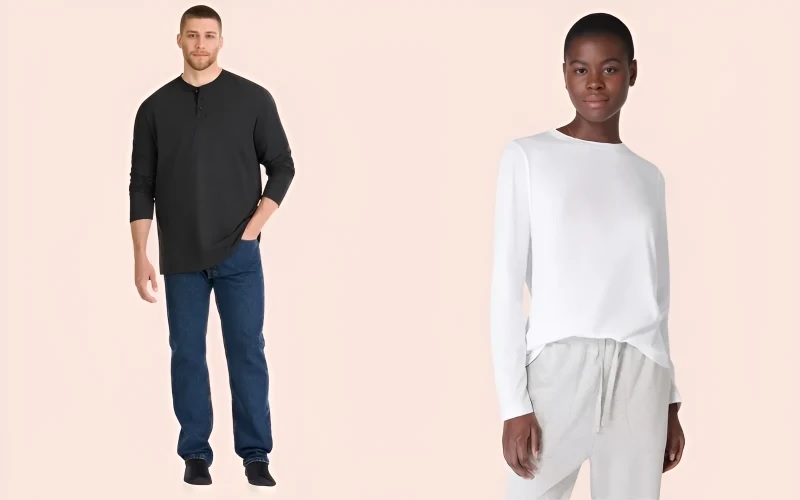

Anyone with a taller-than-average frame knows the familiar, frustrating sensation of cold wrists and drafty ankles. You pull on a brand-new sweater only to find the cuffs hovering awkwardly two inches above your hands. You try on a pair of standard-issue trousers, and they look like high-water clam diggers instead of sleek office wear. For decades, the fashion industry has treated height as a manufacturing afterthought, forcing tall consumers to settle for garments that never quite look or feel right.
The reality of dressing a tall silhouette goes far beyond simply needing more fabric at the bottom of a pant leg. It requires a fundamental understanding of proportion, garment construction, and where standard retail sizing completely misses the mark. Finding tops with genuinely long-enough sleeves and trousers with real, accommodating inseams is less about casual shopping and more about strategic sourcing and knowing exactly how clothes are built.
The Geometry of Standard Sizing vs. Tall Frames
To understand why clothes rarely fit a tall body out of the box, you have to look at how mass-market apparel is designed. Standard pattern grading assumes that human bodies scale horizontally rather than vertically. A retail brand typically designs a garment based on a fit model who stands around five feet, six inches tall. When they scale that pattern up to a large or extra-large, they add generous width across the chest, waist, and hips. However, the vertical measurements—the sleeve length, the torso drop, and the inseam—often increase by mere fractions of an inch.
This horizontal grading system creates a nightmare for tall individuals. Buying a larger size just to gain a little extra sleeve length usually results in a garment that is excessively baggy, sloppy, and entirely lacks structure. True tall sizing is not just about scaling up; it requires an entirely different set of foundational proportions. The armholes must be cut differently, the waistline must be dropped to hit the actual natural waist, and the knee breaks on trousers must be lowered to align perfectly with a longer leg.
Conquering the Sleeve Length Dilemma
Finding a well-fitting long-sleeved top is one of the most persistent challenges for a tall frame. Outerwear, tailored button-down shirts, and heavy knitwear are notoriously the biggest offenders. When a sleeve is too short, it restricts your movement, tightens uncomfortably across the forearms, and ruins the intended silhouette of the outfit. It also forces the wearer into the perpetual, exhausting habit of pushing their sleeves up to the elbow just to make the garment look intentionally styled.
The Anatomy of a Proper Sleeve
When evaluating a top or a tailored jacket, you need to understand how sleeve length is actually measured and advertised. High-quality menswear and specialized tall womenswear measure the sleeve from the center back of the neck, across the shoulder blade, and straight down to the wrist bone. This measurement accounts for broad shoulders, which frequently accompany a taller frame.
If a brand only provides a measurement from the shoulder seam down to the cuff, proceed with high caution. A narrow shoulder width will automatically pull the sleeve seam further up your arm, completely neutralizing any extra length the sleeve itself might have provided.
Strategic Silhouettes for Tall Torsos
If you are shopping outside of dedicated tall brands, certain garment constructions are naturally more forgiving. Drop-shoulder designs and raglan sleeves offer significantly more flexibility because there is no rigid shoulder seam to dictate where the sleeve must begin. The fabric falls naturally down the arm, often providing an extra inch or two of practical length.
Conversely, highly structured blazers with sharp shoulder pads are completely unforgiving. If the sleeve is short, the entire jacket looks ill-fitting and shrunken. For these structured, tailored pieces, investing in specialized tall retailers or utilizing bespoke tailoring is absolutely non-negotiable.
Decoding Inseams and the Importance of the Rise
The apparel industry has heavily diluted the definition of a “tall” inseam over the last decade. Many mainstream retailers slap a tall label on a basic thirty-two-inch inseam. While that might work for someone of average height wearing high heels, it is woefully inadequate for a genuinely tall frame. True tall inseams begin at thirty-four inches, with thirty-six and thirty-eight inches being an absolute necessity for many individuals over six feet tall.
Why the Rise Matters Just as Much
An impressive inseam measurement is entirely useless if you do not factor in the rise of the pant. The rise is the vertical distance from the middle of the crotch seam to the top of the waistband. Tall bodies inherently have longer pelvises and extended lower torsos. If you buy a pant with a thirty-six-inch inseam but a standard eight-inch rise, the crotch will sit uncomfortably low, restricting your stride and aggressively pulling the hemline up every time you take a step.
A truly proportional tall pant requires a proportionally longer rise. A high-waisted trouser designed for a tall frame might require a thirteen or fourteen-inch rise just to comfortably reach the natural waistline without digging in. When shopping online, always look for the rise measurement in the product details. A longer rise will anchor the pants securely to your core, allowing that hard-won inseam to fall perfectly straight to the floor without any fabric distortion.
Hem Allowances and Fabric Composition
When shopping for tailored trousers, professional suits, or elevated workwear, learn to inspect the interior hem of the garment. Premium apparel is often constructed with a generous blind hem, meaning there are two to three inches of extra fabric folded securely inside the bottom of the pant leg. A skilled tailor can easily let this hem down for a minimal fee, transforming a slightly-too-short thirty-two-inch pant into a perfectly tailored thirty-four-inch masterpiece.
Fabric composition is another critical factor that tall shoppers must monitor. Shrinkage is the ultimate enemy of the tall wardrobe. A pair of one-hundred-percent cotton jeans might fit beautifully in the fitting room but lose a full inch of vertical length after their first trip through a warm laundry cycle. Always read care labels closely before purchasing. Opt for blends with a small percentage of elastane or polyester to help the garment hold its shape and length over time, and commit to air-drying your most precious long-inseam pieces to preserve their original fit.
The Jumpsuit and Dress Dilemma
Pants and shirts are difficult enough, but one-piece garments like jumpsuits, rompers, and tailored dresses introduce an entirely new set of proportional nightmares. The waistline on a standard retail dress will almost always hit a tall person directly across the ribcage, creating an awkward, unflattering empire silhouette. Jumpsuits are significantly worse; a torso length designed for a standard frame will aggressively ride up, rendering the garment completely unwearable and highly uncomfortable.
To successfully wear one-piece garments, tall shoppers must demand tall-specific sizing. A dedicated tall jumpsuit will feature an elongated bodice and a lowered waist seam, ensuring the fabric drapes naturally over the hips rather than clinging awkwardly to the midsection. If you must buy standard sizing, look for fluid shift dresses, adjustable wrap styles, or unstructured jumpsuits without a defined, stitched waistline. You can then use a high-quality belt to manually define your waist at its actual, natural position on your torso.
A Strategic Approach to Wardrobe Building
Upgrading your wardrobe to fit your height requires shifting away from impulsive retail therapy and moving toward deliberate, strategic sourcing. You have to become relentless about reading size charts, understanding your exact body measurements, and ignoring the vanity sizing printed on the tag.
Keep a flexible measuring tape in your desk or your home office. Know your exact arm length, your natural waist measurement, your rise preference, and your absolute minimum inseam requirement. When you find a brand that actually cuts their garments for a taller frame, lock in your foundational pieces immediately. Buy the perfect tailored wool trousers in black, navy, and grey. Secure the long-sleeved silk blouses and the high-quality winter coats that actually cover your wrists to protect against the elements.
Having a tall frame is a striking, beautiful physical attribute that naturally commands attention in any room. Your clothing should enhance that inherent presence, not look like it was borrowed from someone a foot shorter. By understanding the mechanics of pattern grading, prioritizing accurate inseams and rises, and refusing to settle for bracelet-length sleeves, you can curate a sophisticated wardrobe that fits impeccably from the shoulders all the way down to the floor.
