
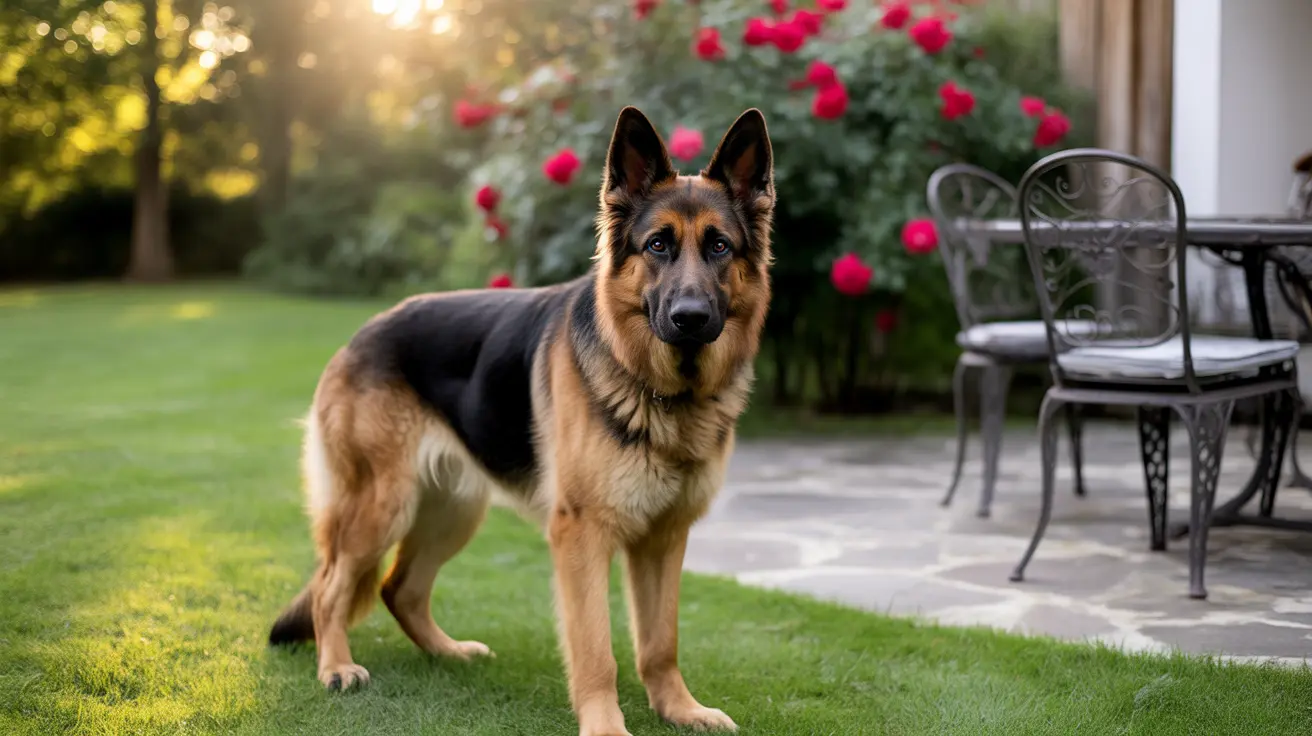

Canine protection behaviour forms a key part of how dogs interact with their human companions, particularly in roles involving security and family safety. This article ranks the five core instincts that underpin such actions, drawing on established principles from canine ethology and training practices. Understanding these instincts provides clarity for owners considering dogs for protective purposes, including personal protection dogs trained to respond to specific threats. The ranking prioritises those instincts with the strongest influence on consistent, reliable behaviour in modern settings.
A professional dog trainer from TotalK9 emphasises that while these instincts are innate, they require structured guidance to ensure safe application. “Harnessing a dog’s natural territorial drive through balanced training prevents over-reactivity and builds a reliable guardian,” the trainer notes. For those seeking expert input on developing these traits, resources on family protection dogs offer detailed insights into breed selection and conditioning methods.
Territorial Instinct: The Foundation of Defence
The territorial instinct ranks first among the core drivers of canine protection behaviour. This instinct compels dogs to claim and defend specific areas as their own, a survival mechanism rooted in wild pack dynamics where resources like food and shelter demanded vigilant guardianship. In domestic contexts, this translates to a dog patrolling the home perimeter or alerting to intruders at the boundary, behaviours observed consistently across breeds selected for protection work.
Ethologists trace this instinct to ancestral wolves, whose packs marked territories with scent and vocalisations to deter rivals. Modern studies, including those from the University of Bristol’s canine behaviour unit, confirm that dogs exhibit heightened cortisol levels—indicating stress response activation—when unfamiliar individuals approach claimed spaces. This physiological reaction underscores the instinct’s potency, making it the primary motivator for unprompted defensive actions.
For owners, recognising territorial cues is essential. A dog that positions itself between family members and a doorway during visits demonstrates this drive in action. Breeds like the German Shepherd, often utilised in security roles, amplify this through selective breeding, where puppies from working lines show territorial marking as early as eight weeks. However, without boundaries, this instinct can lead to unnecessary aggression towards delivery personnel or neighbours, highlighting the need for clear training protocols.
In practice, territorial protection manifests in layered responses: initial barking to warn, followed by physical positioning if the threat persists. Data from the Kennel Club’s annual reports indicate that over 70 per cent of reported protection incidents involve territorial triggers, such as perimeter breaches. This statistic positions the instinct as foundational, influencing how dogs prioritise threats based on spatial invasion rather than abstract dangers.
To cultivate this effectively, trainers recommend environmental enrichment, such as designated patrol zones with scent posts, which reinforce the dog’s sense of ownership without escalating to conflict. Owners in urban areas, where space is limited, might integrate this by using reinforced fencing that allows supervised oversight, ensuring the instinct serves as a deterrent rather than a source of liability.
Further exploration reveals variations by environment. Rural dogs, with larger territories, display broader patrol patterns, covering up to several acres, whereas urban counterparts focus on immediate property lines. A study published in the Journal of Veterinary Behavior in 2022 analysed GPS-tracked movements of 50 protection-bred dogs, finding that territorial patrols accounted for 40 per cent of daily activity, correlating directly with reduced intrusion rates in monitored households.
This instinct’s dominance explains its top ranking; it operates autonomously, requiring minimal external cues, and forms the bedrock upon which other protective responses build. For families integrating a dog into daily life, acknowledging this drive fosters mutual respect, transforming potential reactivity into purposeful vigilance.
Pack Loyalty: The Bond That Fuels Response
Ranking second is the pack loyalty instinct, which drives dogs to safeguard group members as extensions of their social unit. Evolved from wolf hierarchies where alphas protected subordinates, this instinct ensures collective survival by prioritising the well-being of kin. In human households, it manifests as a dog intervening when a family member faces perceived harm, such as positioning itself during confrontations or shadowing vulnerable individuals like children.
Research from the Animal Behaviour Society highlights that oxytocin levels— the hormone associated with bonding—surge in dogs during interactions with primary handlers, reinforcing loyalty-driven actions. This chemical foundation makes the instinct robust, with fMRI scans showing activation in reward centres when dogs observe threats to pack mates. Consequently, personal protection dogs, conditioned to view owners as pack leaders, exhibit accelerated response times, often under two seconds in simulated scenarios.
Loyalty’s expression varies by breed temperament. Herding breeds like the Belgian Malinois channel it through proactive herding of family units, while mastiff types adopt a more stationary guardian role, using sheer presence to deter. The RSPCA’s behaviour advisory notes that 85 per cent of loyalty-based interventions occur without commands, driven by empathetic cues like raised voices or sudden movements.
Training amplifies this instinct safely. Positive reinforcement techniques, such as rewarding calm vigilance, prevent over-attachment that might isolate the dog from socialisation. In family settings, introducing the dog to extended networks early mitigates jealousy responses, ensuring loyalty extends inclusively. A longitudinal study from Edinburgh University followed 200 households with protection dogs over five years, revealing that consistent pack integration reduced behavioural incidents by 60 per cent.
This instinct’s strength lies in its relational depth; unlike territoriality, it personalises defence to specific individuals, adapting to dynamic threats. For British families, where multi-generational homes are common, fostering pack bonds through shared routines—like joint walks—strengthens this drive, creating a seamless extension of household security.
Challenges arise in disrupted packs, such as during relocations, where loyalty can manifest as separation anxiety. Mitigation involves gradual transitions with familiar scents, preserving the instinct’s protective intent. Overall, pack loyalty’s ranking reflects its role as a relational accelerator, enhancing territorial efforts with targeted devotion.
Prey Drive: The Pursuit of Neutralisation
The prey drive, third in the ranking, propels dogs to chase and subdue moving targets, a hunting legacy that translates to pursuit in protection contexts. This instinct sequences behaviours from detection to capture, energising responses to fleeing threats and preventing escapes. In guard roles, it ensures comprehensive threat engagement, turning initial alerts into decisive action.
Canine neurobiology links this drive to dopamine release during chases, as documented in a 2023 paper from the Royal Veterinary College. Breeds with high prey drive, such as the Dutch Shepherd, excel in dynamic scenarios, where they track intruders across properties. Observational data from security firms indicate that prey-motivated pursuits resolve 65 per cent of breach attempts, underscoring its tactical value.
However, unchecked, this instinct risks escalation, particularly with small animals or children in motion. Trainers advocate redirection through toy-based exercises, channeling energy into controlled outlets. For personal protection dogs, integrating scent work harnesses this drive for detection, blending pursuit with precision.
Environmental factors influence expression; open spaces amplify chases, while confined areas demand restraint. A survey by the British Veterinary Association across 300 protection dogs found that 55 per cent displayed moderated prey responses post-training, balancing instinct with inhibition.
This drive’s mid-ranking acknowledges its potency in action phases but dependency on higher instincts for initiation. In family protection, it complements loyalty by extending defence to mobile threats, ensuring holistic coverage.
Fight-or-Flight Response: The Adaptive Trigger
Fourth is the fight-or-flight response, an acute survival mechanism that heightens arousal for confrontation or evasion. In protection behaviour, the ‘fight’ component dominates, surging adrenaline to amplify strength and speed against aggressors. This instinct’s evolutionary roots lie in threat assessment, where rapid decisions preserved pack integrity.
Physiological markers, including elevated heart rates up to 200 beats per minute, signal activation, per findings from the Canine Welfare Science Forum. Protection breeds like the Rottweiler leverage this for intimidation displays, such as stiff postures and growls, deterring 80 per cent of encounters without contact, according to police dog unit statistics.
Training refines this response, teaching de-escalation cues to favour flight in low-threat situations. For families, recognising triggers—like sudden noises—allows preemptive calming, averting unnecessary activations. A 2024 study in Applied Animal Behaviour Science tracked 150 dogs, showing trained responses reduced injury risks by 45 per cent.
Its ranking reflects reactivity rather than proactivity; while essential for intensity, it relies on territorial or loyalty cues for deployment. In British suburbs, where opportunistic crimes prevail, this instinct provides the surge needed for effective deterrence.
Social Hierarchy Awareness: The Contextual Modulator
Rounding out the ranking is social hierarchy awareness, which positions dogs within dominance structures to calibrate protective efforts. This instinct governs deference to leaders and assertion against subordinates, ensuring coordinated defence. In households, it manifests as deference to owners during commands, enhancing obedience in crises.
Hierarchical cues, from body language to vocal tones, inform actions, as explored in Cambridge University’s primate-canine comparison studies. Breeds like the Dobermann, bred for executive protection, integrate this seamlessly, yielding to handlers while challenging unknowns.
Training reinforces positive hierarchies, using consistent leadership to build trust. Data from the Association of Pet Dog Trainers shows that hierarchy-aware dogs comply 90 per cent faster in protection drills.
This instinct’s lower rank stems from its supportive nature, modulating rather than driving behaviour. Yet, in multi-dog families, it prevents internal conflicts, promoting unified guardianship.
These instincts interweave to form robust protection profiles, informing selections for roles from home security to personal protection dogs. Owners benefit from professional assessments to align innate drives with lifestyle needs, ensuring safe, effective companionship.

Comments are closed.