
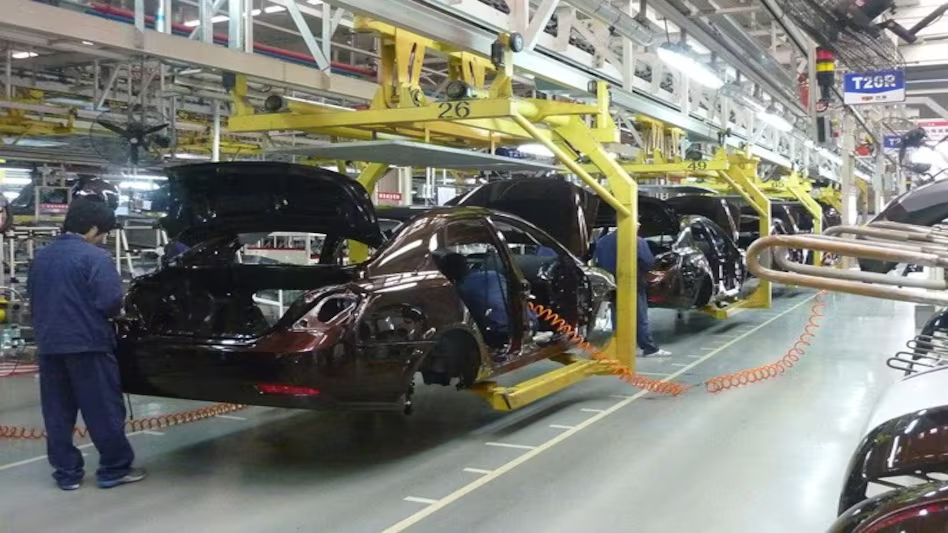

The auto industry has long been a cornerstone of global economic growth, technological innovation, and societal transformation. The term auto encompasses a wide spectrum of vehicles, including cars, trucks, motorcycles, and electric vehicles, which have become indispensable in daily life. This article explores the multifaceted dimensions of the auto industry, examining its history, technological advancements, environmental implications, economic influence, and future trajectory.
The Historical Evolution of the Automobile
The story of the automobile began in the late 19th century with the invention of the internal combustion engine. Pioneers like Karl Benz and Henry Ford revolutionized personal mobility by introducing practical vehicles and assembly-line manufacturing techniques. Ford’s Model T, launched in 1908, became the symbol of mass motorization and democratized car ownership, setting the foundation for modern auto manufacturing.
Key Milestones in Auto Development
- 1886: Karl Benz patents the first petrol-powered car.
- 1903: Ford Motor Company is established, setting the stage for mass production.
- 1913: Introduction of assembly line manufacturing, drastically reducing production costs.
- 1930s–1950s: Expansion of road networks facilitates widespread car usage.
- 1970s: Emergence of fuel-efficient and compact cars in response to oil crises.
- 1990s–2000s: Growth of hybrid and electric vehicles, integrating advanced electronics.
- 2010s–Present: Development of autonomous vehicles and AI-driven driving systems.
Understanding this evolution highlights how innovation and societal demand have continually shaped the auto industry.
Technological Advancements Transforming the Auto Industry
Modern vehicles are no longer just mechanical constructs; they are sophisticated systems integrating advanced engineering, electronics, and artificial intelligence. These innovations have redefined performance, safety, and efficiency in the auto sector.
Electric Vehicles and Sustainability
The shift from traditional internal combustion engines to electric vehicles (EVs) is a central technological trend. EVs reduce greenhouse gas emissions, lower operational costs, and support sustainable urban development. Governments worldwide are incentivizing EV adoption through subsidies, tax benefits, and charging infrastructure expansion.
Autonomous Driving and Artificial Intelligence
Self-driving technology represents a quantum leap in automotive innovation. Leveraging machine learning, sensor fusion, and real-time data analysis, autonomous vehicles aim to reduce human error, improve traffic management, and enhance mobility for populations unable to drive. Companies are conducting extensive trials, moving toward Level 4 and Level 5 autonomy.
Connectivity and Smart Features
Connected cars integrate Internet of Things (IoT) technologies, allowing vehicles to communicate with infrastructure, other vehicles, and drivers’ devices. Features such as predictive maintenance alerts, smart navigation, and infotainment systems enhance the user experience while improving operational efficiency.
Economic Significance of the Auto Industry
The auto industry is a critical economic driver, influencing global trade, employment, and innovation. Its impact spans multiple sectors, from raw materials and manufacturing to insurance and financial services.
Employment and Manufacturing
Automobile manufacturing directly employs millions worldwide. Beyond assembly line jobs, the industry supports research and development, design, and supply chain management. Ancillary sectors, including tire production, parts manufacturing, and electronics, create additional employment opportunities.
Global Trade and Market Dynamics
Automobiles are among the most traded goods globally. Countries such as the United States, Germany, Japan, and China dominate production and export, shaping international trade policies and economic strategies. Market trends fluctuate based on consumer demand, fuel prices, and regulatory frameworks, making the auto industry a vital economic indicator.
Innovation and Industrial Growth
The auto sector drives technological advancements that extend beyond vehicles. Innovations in battery technology, lightweight materials, AI algorithms, and manufacturing automation often benefit other industries, from aerospace to consumer electronics.
Environmental and Social Impacts
While the auto industry has advanced mobility and economic development, it also presents environmental and social challenges that require ongoing mitigation.
Carbon Emissions and Climate Change
Traditional vehicles powered by fossil fuels contribute significantly to carbon emissions, air pollution, and climate change. The adoption of EVs, alternative fuels, and stricter emission standards is crucial in reducing the ecological footprint of transportation.
Urban Planning and Infrastructure
Automobiles influence urban landscapes, necessitating extensive road networks, parking facilities, and traffic management systems. Poor planning can result in congestion, pollution, and reduced quality of life. Modern urban mobility strategies prioritize public transport integration, EV charging networks, and smart city initiatives.
Safety and Accident Prevention
Vehicle safety technologies, including airbags, anti-lock braking systems, and electronic stability control, have dramatically reduced fatalities. Autonomous driving and AI-powered collision avoidance systems promise further improvements, though ethical and regulatory considerations remain critical.
The Future of the Auto Industry
The future of automobiles is poised to be shaped by sustainability, connectivity, and automation. Emerging trends suggest transformative shifts in how society perceives mobility.
Shared Mobility and Urban Integration
Ride-sharing, car-sharing, and mobility-as-a-service platforms are redefining personal vehicle ownership. These models reduce traffic congestion, lower environmental impact, and optimize urban space usage.
Advanced Energy Solutions
Innovations in battery chemistry, hydrogen fuel cells, and renewable energy integration are expanding sustainable options for mobility. The development of ultra-fast charging infrastructure and energy-efficient designs will accelerate the adoption of green vehicles.
Artificial Intelligence and Predictive Analytics
AI-powered vehicles capable of learning driver behavior, anticipating maintenance needs, and optimizing route planning will enhance safety and efficiency. Data-driven insights will also support manufacturers in developing more user-centric, adaptive vehicles.
Policy and Regulatory Influence
Government regulations and incentives will continue to play a crucial role in shaping the industry. Policies promoting EV adoption, emissions reduction, and autonomous driving standards will influence market dynamics and innovation trajectories.
Key Challenges Facing the Auto Industry
Despite promising developments, the industry faces several persistent challenges that require strategic solutions.
- Supply Chain Disruptions: Semiconductor shortages, raw material scarcity, and geopolitical tensions impact production schedules.
- Cost and Affordability: Advanced technology integration raises production costs, affecting vehicle affordability.
- Regulatory Compliance: Navigating varying environmental and safety regulations across regions is complex.
- Consumer Adaptation: Public acceptance of autonomous vehicles, EVs, and shared mobility models is uneven.
Addressing these challenges will determine the long-term resilience and sustainability of the auto sector.
Conclusion
The auto industry is a dynamic and multifaceted sector that has shaped modern life through innovation, economic development, and societal transformation. From the invention of the first petrol-powered car to the rise of electric and autonomous vehicles, the journey of the auto industry reflects humanity’s quest for mobility, efficiency, and sustainability. By embracing technological innovation, environmental stewardship, and intelligent urban planning, the industry is poised to redefine transportation for generations to come.
Frequently Asked Questions
What are the benefits of electric vehicles over traditional cars?
Electric vehicles produce zero tailpipe emissions, reduce fuel costs, require less maintenance, and contribute to sustainable energy goals. They also support cleaner urban environments and lower greenhouse gas output.
How is autonomous driving changing the auto industry?
Autonomous vehicles enhance safety by reducing human error, optimize traffic flow, and provide mobility solutions for non-drivers. AI-driven features improve route efficiency, predictive maintenance, and driver assistance.
What role does the auto industry play in the global economy?
The auto industry contributes significantly to GDP, employment, and trade. It supports ancillary sectors, drives technological innovation, and influences global economic policies and market trends.
How are auto manufacturers addressing environmental concerns?
Manufacturers are investing in electric and hybrid vehicles, sustainable materials, fuel-efficient technologies, and green manufacturing practices to minimize environmental impact.
What future technologies are expected in the auto sector?
Emerging trends include AI-powered autonomous vehicles, advanced battery and hydrogen fuel technologies, connected car ecosystems, predictive analytics for maintenance, and shared mobility platforms.
Why is urban planning important for the auto industry?
Effective urban planning integrates transportation infrastructure, reduces congestion, ensures safety, and facilitates EV adoption. Smart city initiatives and multimodal transport systems enhance urban mobility efficiency.
What challenges do electric vehicles face in widespread adoption?
EV adoption is hindered by charging infrastructure limitations, battery production costs, consumer awareness, and energy grid capacity. Ongoing technological improvements and policy support aim to address these challenges.

Comments are closed.